
AI Knowledge Management Tools: 2026 Trend Report

Gartner research shows that 47% of knowledge workers struggle to find the information they need.
Traditional knowledge bases have not truly solved this — search is not smart enough, content updates fall behind business changes, and users find articles but still cannot locate their answers.
In 2026, AI-powered knowledge management tools are offering a better approach: letting users ask questions directly while the AI finds answers from company documents and cites the source.
This is the starting point behind Denser AI.

3 Common Pain Points in Enterprise Knowledge Bases#
Denser AI has found through conversations with enterprise users that poor knowledge base performance typically comes down to three areas:
Pain Point 1: Search experience is poor — users would rather just ask someone#
Most companies have knowledge scattered across 5–10 systems: wikis, shared drives, email, Slack, internal portals, and standalone documentation sites.
Traditional knowledge bases can only search within their own platform and rely on exact keyword matching — an employee searching "return refund" will not find a document titled "Product Return and Refund Processing Guidelines."
After two failed searches, they give up and ask a colleague instead.
Pain Point 2: Knowledge base updates cannot keep up with business changes#
Products iterate, policies change, workflows get adjusted — but the knowledge base articles are still last quarter's version. Outdated information is more dangerous than missing information.
When employees or customers act on incorrect content, the resulting problems are worse than "couldn't find it." For more on how this impacts customer service specifically, see our guide on AI customer service chatbots.
Pain Point 3: Found an article, but cannot find the answer#
A user finds a 3,000-word document but still needs to locate which paragraph contains their answer. For customers who need quick resolution or busy employees, this experience is far from efficient.
4 Industry Trends Reshaping Knowledge Management in 2026#
These pain points are not unique to individual companies. In 2026, the AI knowledge management tools market has reached $18.37 billion (CAGR 8.74%), driven by several core technology trends:
Trend 1: Semantic search replacing keyword matching#
AI understands the intent behind a question rather than requiring users to guess the exact wording in documents. Industry data shows that semantic search can reduce information retrieval time by 60–80%.
Trend 2: RAG architecture making AI answers verifiable#
RAG (Retrieval-Augmented Generation) first retrieves relevant content from company documents, then generates answers based on that retrieved content.
Combined with source citations, users can verify the accuracy of every answer.
For a deeper look at how RAG works in knowledge management, see our AI knowledge base guide.
Trend 3: Multi-source integration replacing standalone knowledge bases#
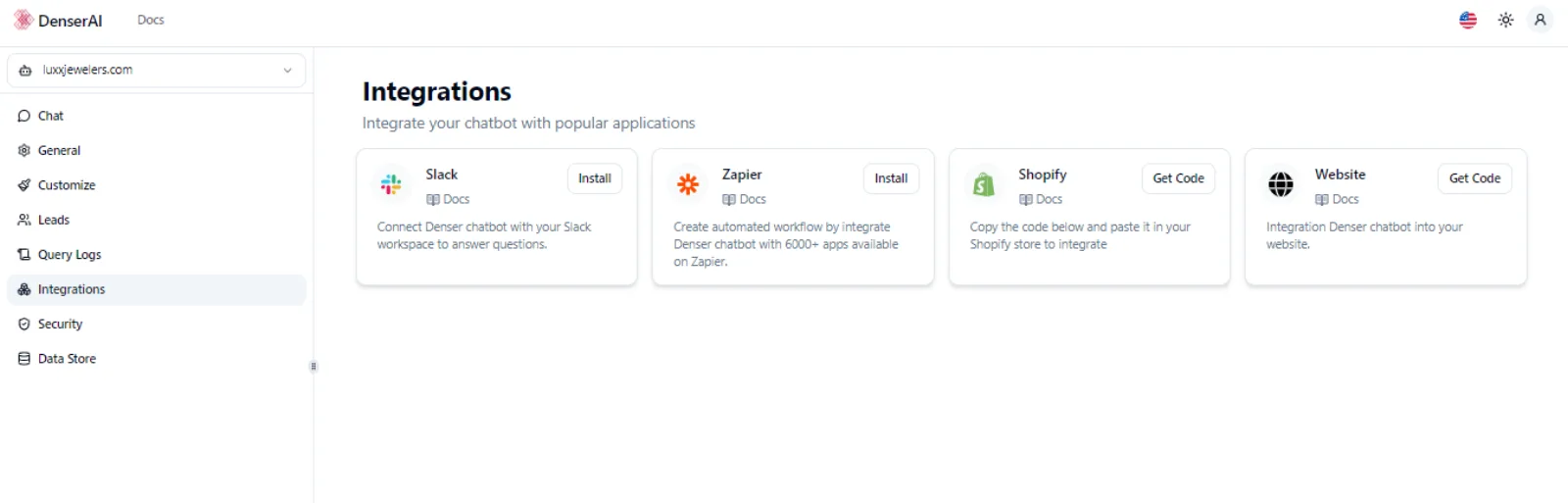
Next-generation tools connect directly to a company's existing data sources (websites, PDFs, internal docs), automatically indexing and syncing content rather than requiring businesses to rebuild everything on a new platform.
Trend 4: Role-based knowledge delivery#
The same question gets different depth of answers for different roles. Managers see summaries and trends; frontline staff see step-by-step procedures and specific data.
Personalized answers based on role and permissions are becoming a standard capability.
How Denser AI Solves These Problems#
For each of the three pain points above, Denser AI provides a corresponding solution.
Solution 1: Multi-source integration + semantic search — solving "can't find it"#
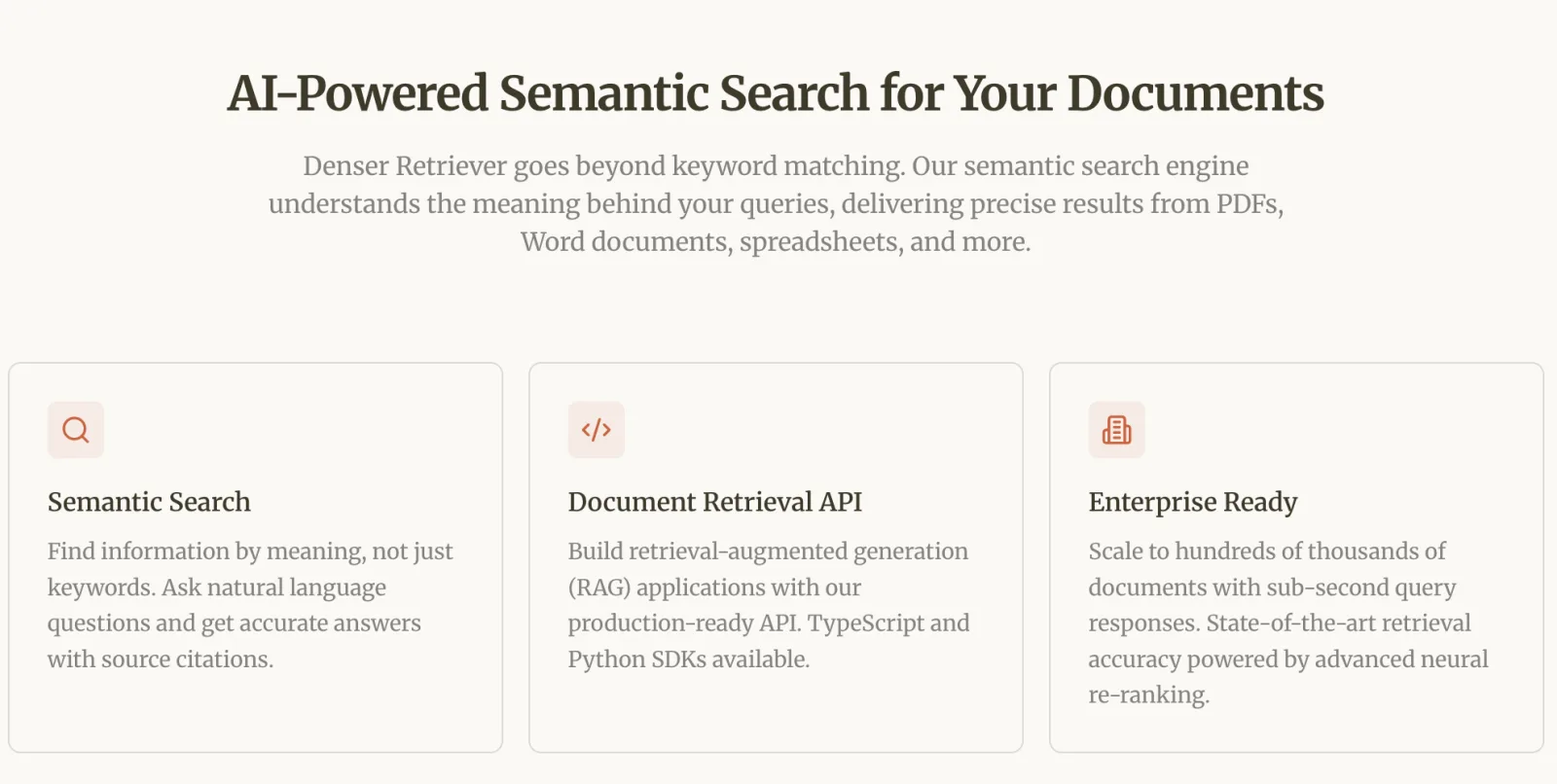
Denser AI is built on Denser Retriever, a proprietary semantic search engine that connects to multiple existing data sources — websites, PDFs, DOCX files, and internal docs — without requiring content to be rebuilt on a new platform.
Semantic search understands user intent, so there is no need to guess keywords. An employee searching "return refund" gets matched to the "Product Return and Refund Processing Guidelines" and receives a direct answer.
For details on connecting your documents, see our document chatbot setup guide.
Solution 2: Connect to original data sources with auto-sync — solving "outdated content"#
Denser AI connects to your original data sources rather than copying content into a separate knowledge base.
When a document is updated, the AI's answers update automatically — no one needs to manually sync knowledge base articles.
Solution 3: AI answers directly + source citations — solving "found article but not the answer"#
After a user asks a question, Denser AI extracts the relevant section from the documentation, generates a direct answer, and cites which document and paragraph it came from.
Users do not need to read through long articles — they ask a question, get an answer, and click the source link to verify.
Performance Across Enterprise Scenarios#
| Enterprise Scenario | Traditional Approach | With Denser AI |
|---|---|---|
| Customer self-service | Customer searches keywords → browses article list → reads to find answer | Customer asks question → AI answers + source citation |
| Product documentation | Developer browses doc site page by page | Developer asks question → AI extracts steps from API docs |
| HR policy inquiries | Employee repeatedly asks HR the same questions | Employee asks question → AI returns policy clause + source |
| Compliance & training | Staff search PDFs for specific policy clauses | Staff ask question → AI cites the exact policy paragraph |
Three Core Capabilities#
Source citations. Every AI answer identifies which document and which section the information came from.
In enterprise scenarios — especially policy inquiries, technical documentation, and compliance questions — uncited AI answers lack credibility. Every Denser AI response includes a source citation that users can click to verify.
Learn more about how this works in our AI knowledge management overview.
Grounded in your existing content. Enterprise knowledge lives in many places — help center articles, product manuals, internal wikis, and policy PDFs. Denser AI ingests these existing sources directly and keeps them in sync, so answers stay accurate as content evolves. No content rewrites, no parallel knowledge base.
Enterprise-grade security. Denser AI holds SOC 2 Type II certification with US-based hosting, serving government agencies including Onondaga County Sheriff's Office and Cosumnes Community Services District.
Sensitive enterprise data is never used to train public AI models. Learn more about Denser AI's security credentials.
Pricing. AI capabilities are built into every plan, starting at $39/month.
AI knowledge management should not be exclusive to large enterprises — small and mid-size teams can afford it too.
Assess Whether Your Enterprise Needs an Upgrade#
These signals suggest your current knowledge management setup may no longer be sufficient:
- Customers or employees frequently "can't find existing information" and resort to filing tickets or asking colleagues directly
- Knowledge base articles are outdated and stale information is starting to cause operational errors
- Information is scattered across multiple systems with no unified search entry point
- Your support team spends significant time answering repetitive questions
Upgrading does not have to happen all at once. You can start by testing in a single scenario — such as customer self-service or internal HR Q&A — and expand after validating the results.
Experience the Difference AI Knowledge Management Makes#
The core need in enterprise knowledge management is shifting from "store documents" to "help users get accurate answers fast."
Semantic search, RAG, multi-source integration, and source citations are mature product capabilities in 2026.
If you want to see how AI knowledge management compares to a traditional knowledge base in practice, you can review plan details at denser.ai/pricing/.
For a broader comparison of knowledge base tools, see our SaaS knowledge base software guide.