

5 Signs Your Support Team Has Outgrown ChatGPT

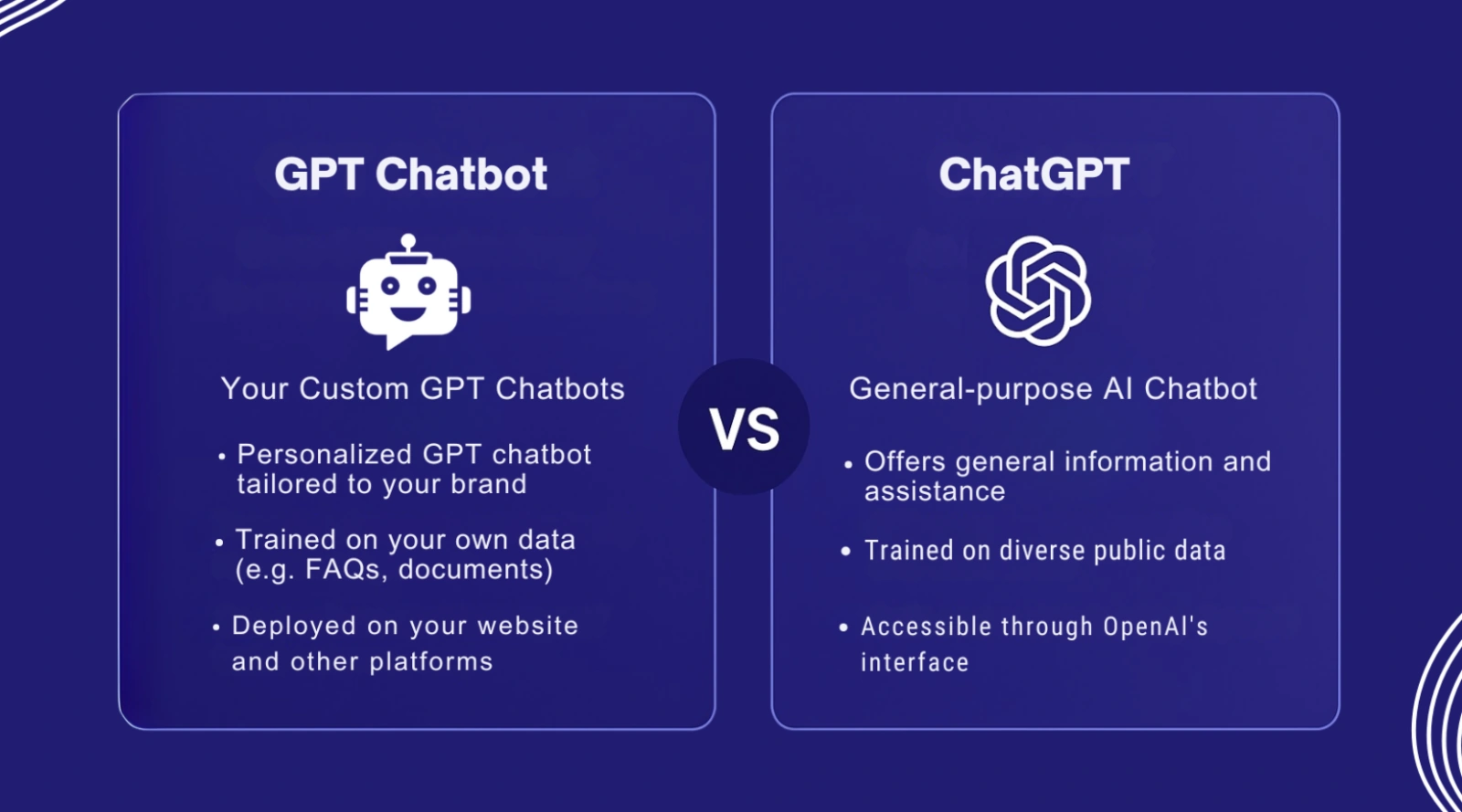
ChatGPT is where a lot of customer support experiments begin — fast to set up, broadly capable, easy to demo.
But as teams move from pilot to production, specific patterns start to emerge that signal something more dedicated is needed.
The five signals below come from support teams that have already run the ChatGPT experiment. If more than two apply, it's worth evaluating dedicated alternatives like Denser AI.
Signal 1: Inaccurate or Outdated Chatbot Answers#
Why This Happens#
ChatGPT generates responses based on a combination of your prompts and its training data.
Even with retrieval configurations, freshness depends heavily on how carefully your team manages the knowledge pipeline — a constant, manual effort. Product updates, policy changes, and pricing revisions don't propagate automatically.
The deeper issue is reliability: a chatbot that combines your documents with general model knowledge can produce confident-sounding answers blending accurate specifics with outdated or hallucinated details — and users have no easy way to tell which is which.
Business Impact#
Customers acting on wrong pricing, policy, or feature information generate escalation tickets
Support teams spend time correcting chatbot errors rather than handling new queries
Users who receive one wrong answer start double-checking everything, eliminating the time savings the chatbot was supposed to create
How Denser AI Addresses This#
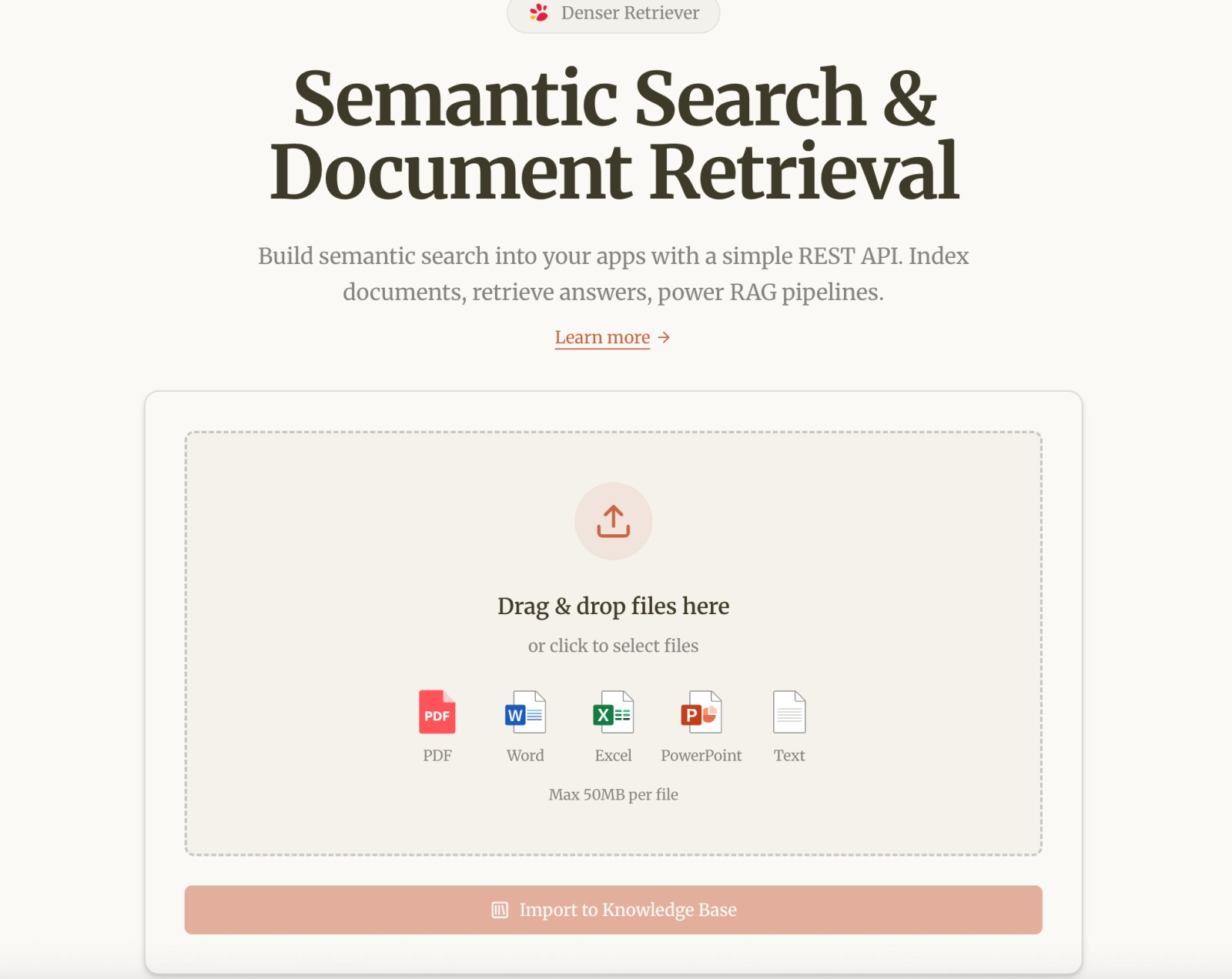
Denser AI retrieves answers directly from your live knowledge sources — website pages, PDFs, help center docs — using RAG (Retrieval-Augmented Generation).
The Denser Retriever underneath combines keyword search, vector semantic search, and ML reranking to surface the most relevant content from your knowledge base.
Each answer is generated from current content, not from a static snapshot trained weeks ago. Re-crawling keeps your chatbot synchronized with your latest documentation, and every answer includes a source citation customers can verify.
Signal 2: Failing Customer Data Compliance Audits#
Why This Happens#
Using a general-purpose AI tool for customer conversations creates compliance exposure in two ways: data handling and auditability.
Customer queries — order details, account information, complaints — are processed externally in ways that may not align with your data residency or retention requirements.
More practically, when an auditor asks for a complete record of customer-facing AI interactions, teams that built their own integration on top of an API often don't have the unified, exportable audit trail compliance teams need.
Business Impact#
Compliance gaps block enterprise sales — procurement teams ask directly about data processing agreements
Audit failures require expensive remediation or force teams to shut down the chatbot deployment
Legal exposure in regulated industries (healthcare, finance, edtech) if personal data flows aren't documented
How Denser AI Addresses This#
Denser AI operates under documented data handling policies with clear separation between your knowledge content and customer conversation data.
Conversation logs are retained and exportable for audit purposes, and customer conversation data is not used for model training — providing the paper trail compliance audits require.
Signal 3: Rising Chatbot Maintenance Costs#
Why This Happens#
Running ChatGPT as a customer support layer requires ongoing engineering work that isn't always visible until it accumulates.
Updating system prompts when products change, re-testing edge cases after model updates, managing chunking and retrieval quality, monitoring for hallucination patterns, debugging unexpected answer failures — none of this is a one-time cost.
Teams often underestimate this burden because the initial setup looks lightweight. The actual cost surfaces over time in engineering hours, QA cycles, and the operational drag of keeping a general system calibrated for a use case it wasn't designed for.
Business Impact#
Engineering time spent on chatbot maintenance is time not spent on core product work
Knowledge currency degrades whenever a product update gets missed — causing the accuracy problems described in Signal 1
Maintenance burden creates pressure to under-invest, leading to worse outcomes than no chatbot at all
How Denser AI Addresses This#
Denser AI is built to minimize maintenance overhead.
Re-crawling keeps knowledge current without manual prompt updates, and the platform manages chunking, embedding, and retrieval optimization internally.
For most teams, switching from a DIY ChatGPT setup reduces ongoing maintenance from hours per week to a periodic content review.
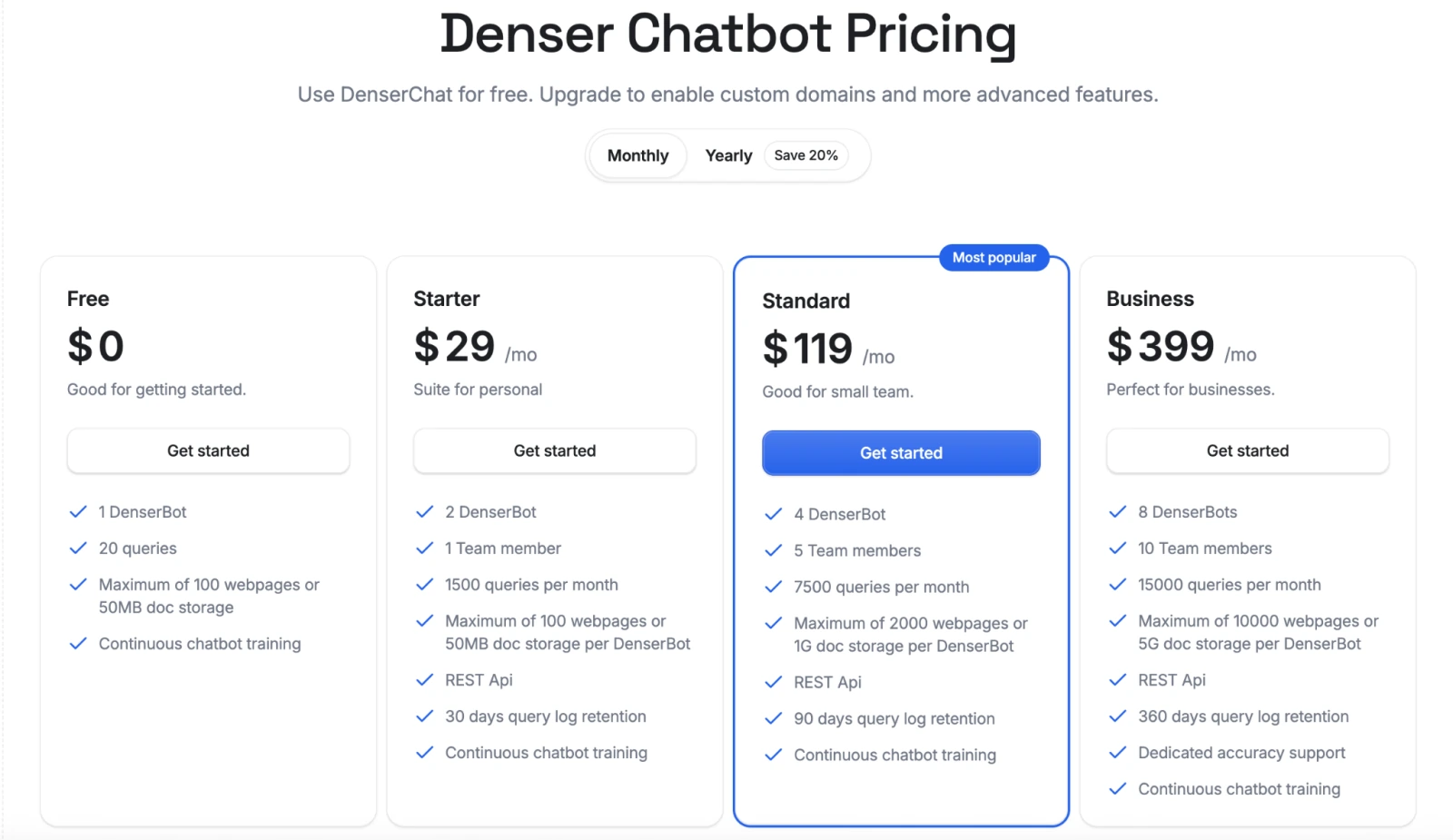
Denser AI's pricing page lays out the platform cost for direct comparison against your current engineering spend.
Signal 4: No CRM or Helpdesk Integration#
Why This Happens#
A conversational AI that can't write data back to your business systems operates as a silo.
Prospects asking pre-sales questions, requesting a demo, or expressing intent to upgrade are interacting with your chatbot — but that intent isn't captured anywhere actionable.
This is less about what ChatGPT can't do technically and more about what most teams actually have configured: a chatbot that answers questions but doesn't trigger any downstream action in Salesforce, HubSpot, Zendesk, or wherever your team actually works.
Business Impact#
High-intent leads identified through chat don't enter the sales pipeline — they fall through the gap between the chatbot and CRM
Support escalations require users to re-explain their issue because no ticket was created
ROI from the chatbot is invisible because conversions and deflections aren't tracked against any business system
How Denser AI Addresses This#
Denser AI is designed to be part of a business workflow, not just a conversational endpoint.
Lead capture happens directly in chat, and conversations can be passed into your CRM or helpdesk via API integration. A pre-sales conversation ending in a demo request gets into your sales pipeline; a technical issue needing follow-up doesn't get lost.
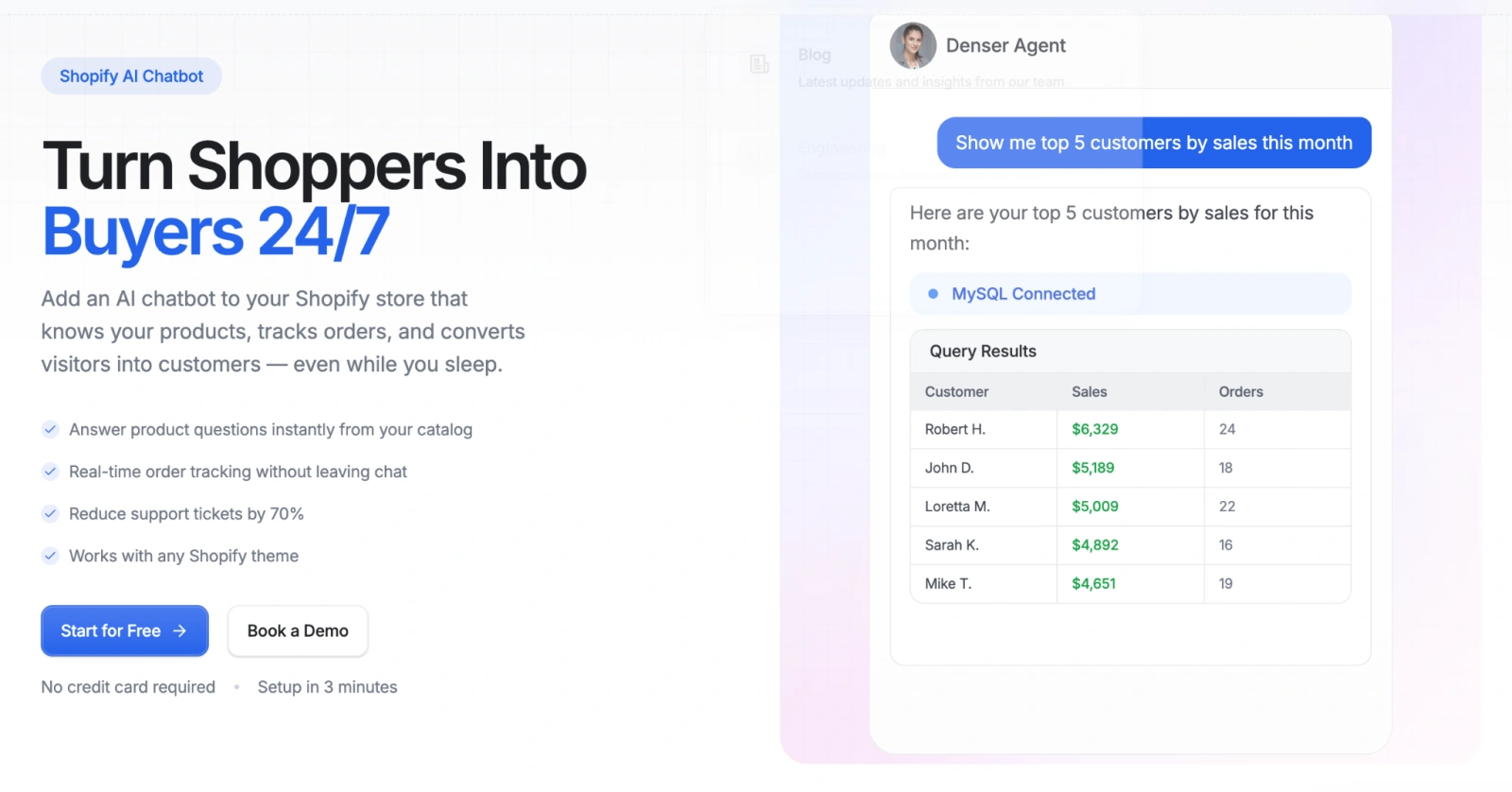
For ecommerce teams, Denser AI's Shopify chatbot and ecommerce chatbot solutions are configured for these workflows out of the box.
Signal 5: Inconsistent Answers Across Support Channels#
Why This Happens#
Customer support increasingly happens across multiple surfaces: website, help center, in-app assistant, mobile.
Maintaining consistency with a general-purpose AI requires synchronizing separate deployments, managing different context windows, and ensuring updates propagate everywhere simultaneously. In practice, teams prioritize one surface and let the others lag.
The result is fragmentation: a user gets one answer on the marketing site and a different answer when they contact support through the app. That inconsistency erodes trust more than no chatbot at all.
Business Impact#
Users who receive inconsistent answers escalate more often, defeating the purpose of automation
Support teams spend time resolving confusion caused by the chatbot itself rather than the underlying issue
Brand credibility suffers when the same company gives different answers on different surfaces
How Denser AI Addresses This#
Denser AI deploys from a single knowledge base across all supported surfaces.
Update your documentation once, and the change is reflected everywhere — website widget, help center, in-app assistant — without separate sync processes.
It also simplifies QA: validate the knowledge base once instead of testing each channel separately. See Denser AI's solutions page for the full range of supported deployments.
Conclusion#
The five signals above aren't a critique of ChatGPT — they're a map of where general-purpose AI reaches its operational limits for production support.
Outdated answers, compliance gaps, maintenance costs, disconnected CRM workflows, inconsistent multi-channel experiences — solving these requires infrastructure built for support operations, not retrofitted onto a general AI.
If two or more apply to your current setup, Denser AI is worth a direct evaluation.
FAQ About Moving Beyond ChatGPT for Customer Support#
Can't we just configure ChatGPT more carefully to avoid these problems?#
Some issues like knowledge freshness can be partially addressed with prompt engineering, but that's ongoing maintenance, not a fix.
Compliance and CRM integration gaps require dedicated infrastructure regardless of how well the prompt layer is configured.
Is Denser AI actually harder to set up than using ChatGPT?#
The setup effort is comparable. Connect your website, PDFs, or help center, and the platform handles crawling, chunking, and retrieval automatically — what you avoid is the ongoing tuning.
How do I know if the ROI justifies switching?#
The clearest signal is maintenance cost. Track the engineering and QA hours your team spends keeping the current setup accurate.
If that exceeds the cost of a dedicated platform, the switch pays for itself before accuracy or CRM gains.
Does switching platforms mean rebuilding everything from scratch?#
Denser AI ingests your existing knowledge sources directly: the same docs, help center, and website content you already use.
Deployment is a widget embed or API integration, typically measured in days, not weeks.
What kinds of businesses get the most value from Denser AI?#
Teams running customer support, ecommerce, or knowledge-base scenarios where accuracy and source-traceable answers matter — particularly mid-sized businesses replacing manual support workflows.