
Compare Digital Customer Service Software Platforms (2026 Guide)

Choosing digital customer service software in 2026 isn't simply about finding a tool that answers messages faster. For most companies, the real question is more practical:
which platform can reduce repetitive support work, control service costs, and still give customers fast, accurate answers?
The "best" platform depends heavily on context. A system designed for a large support organization may be too complex for a small team. A lightweight chat widget may be quick to deploy but fail to reduce real workload.
What ultimately matters is not the length of a feature list, but whether the platform fits your support model, business size, and operational priorities.
Why Companies Struggle to Choose the Right Platform#
Most companies do not start looking for customer service software because they want more tools. They start searching when their current setup stops working efficiently.
The most common trigger is repetitive support volume. Support teams often spend hours every week answering the same questions about returns, pricing, onboarding, shipping, account access, or product usage.
That work is necessary, but it pulls agents away from escalations and more valuable customer conversations.
Another issue is implementation friction. Many customer service platforms look powerful during demos but take weeks—or even months—to fully implement.
They often require technical configuration, internal process changes, and long onboarding cycles before the team sees real benefits.
Accuracy has also become a major concern with the rise of AI-powered tools. A system that responds quickly but gives inaccurate answers can create even more work for support teams. In customer service, trust matters as much as speed.
Finally, there is the hidden factor of total cost. Subscription pricing is easy to compare, but the real cost of a support platform includes onboarding time, internal training, maintenance, admin complexity, and the amount of support work that still remains manual.
The Four Criteria That Matter Most#
A practical comparison of digital customer service software should begin with four key questions.
-
Can the platform reliably reduce repetitive work? The main goal of customer service software is not simply adding another support channel. The real value lies in reducing the manual effort required to handle common requests so your team can focus on more complex cases.
-
How quickly can the platform become useful? Some tools require long implementation cycles before they deliver value. Others can begin answering customer questions almost immediately. For many teams, speed-to-value matters more than feature complexity.
-
Does the platform match your existing workflow? Some organizations require structured ticket routing and operational control. Others mainly need self-service answers from documentation or website content. The right platform should align with how your support team actually works.
-
Will it improve cost efficiency over time? The most effective platform is not necessarily the cheapest one. The real metric is how much manual work it removes from your support team.
Three Types of Digital Customer Service Platforms#
Not all customer service software solves the same problem. Most platforms fall into three broad categories, each built around a different support philosophy.
Traditional Customer Service Suites#
These platforms are designed for organizations that require structured workflows and operational control. They typically include ticket routing, escalation systems, reporting dashboards, and complex service management features.
Their main strength is operational depth. However, they often require longer deployment cycles and higher administrative overhead.
Basic Chatbot or Live Chat Tools#
Basic chat or messaging tools focus on enabling simple website conversations. They are typically easy to deploy and inexpensive to launch.
However, these tools often struggle when questions require deeper context from documentation or product knowledge. They are good at messaging, but limited at answering knowledge-based questions accurately.
AI-First Support Platforms#
A newer category of platforms focuses on reducing repetitive inquiries through self-service automation.
Instead of acting only as a messaging tool, AI-first platforms retrieve information from business content—such as websites, documentation, product manuals, or knowledge bases—and generate answers automatically.
This approach is gaining traction among companies that want to reduce support workload quickly without building a complex service software stack.
Why AI-First Support Platforms Are Gaining Attention#
In many companies, the problem is not that every customer question is difficult. The real issue is that too many simple questions still reach human agents.
If a platform can accurately answer those questions using trusted business information, the support team becomes significantly more efficient without sacrificing customer experience.
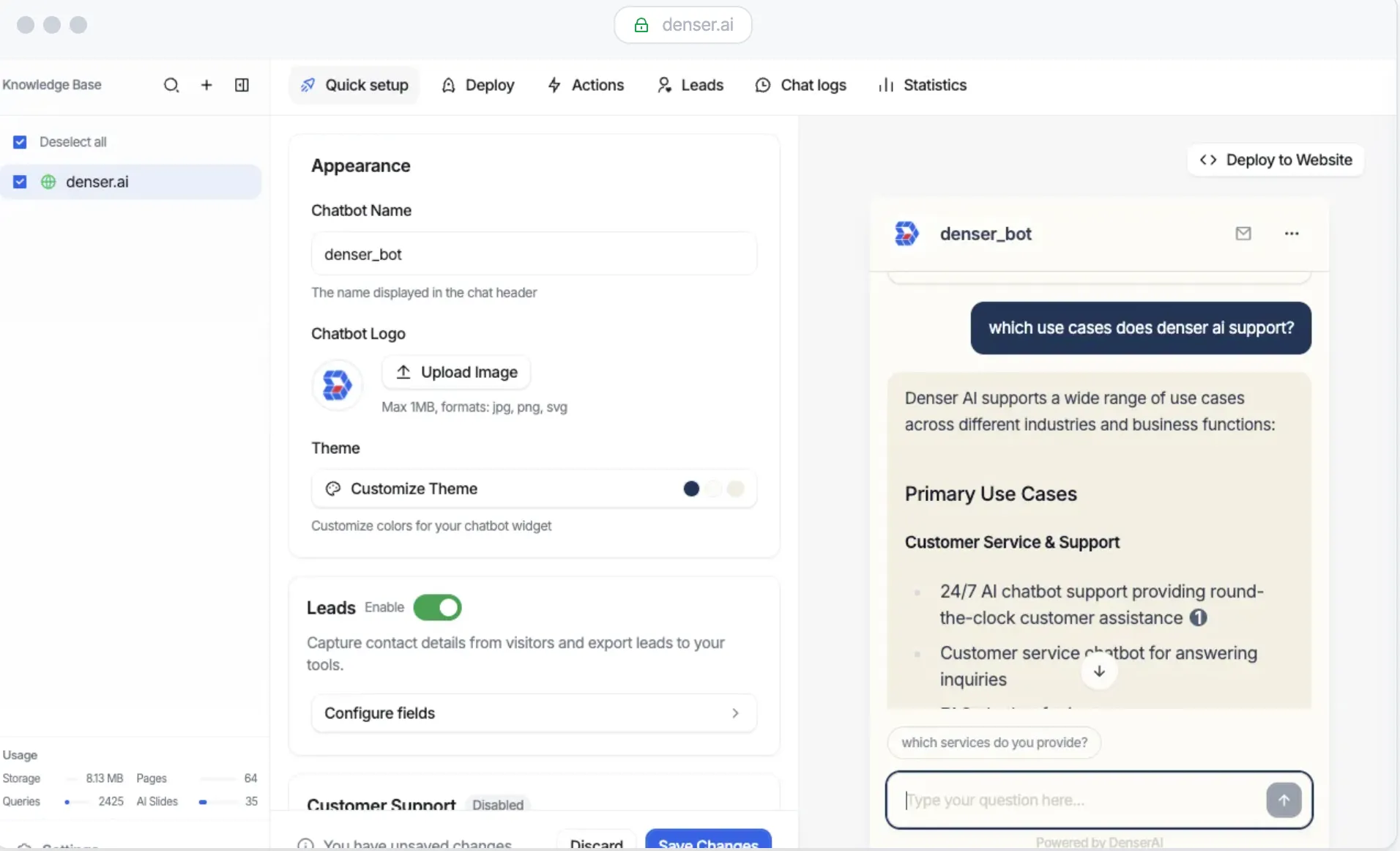
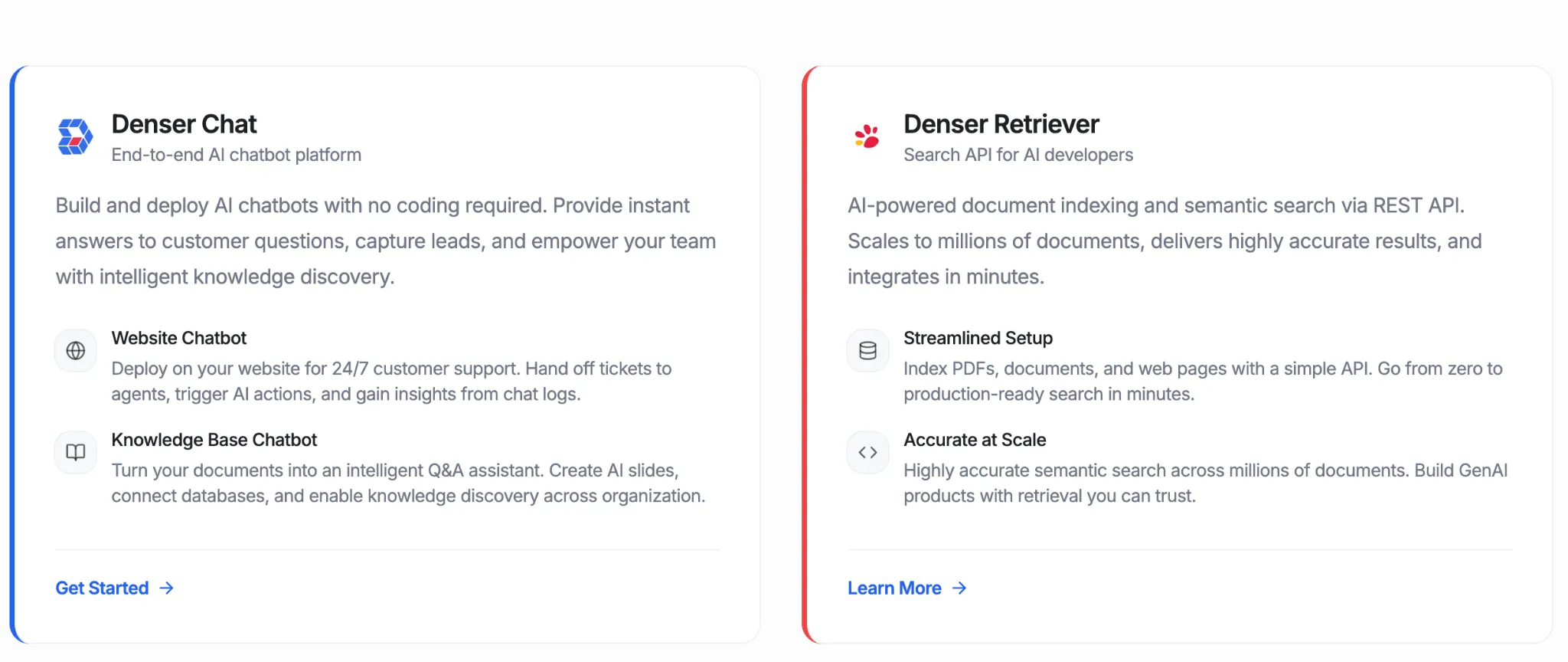
Platforms such as Denser AI are built specifically around this model. Rather than functioning as a simple chat widget, Denser acts as an AI-powered support layer that retrieves answers directly from your business content.
The system can respond using information from:
- Website pages
- PDF documentation
- Product manuals
- Structured Q&A data
- Databases or connected systems
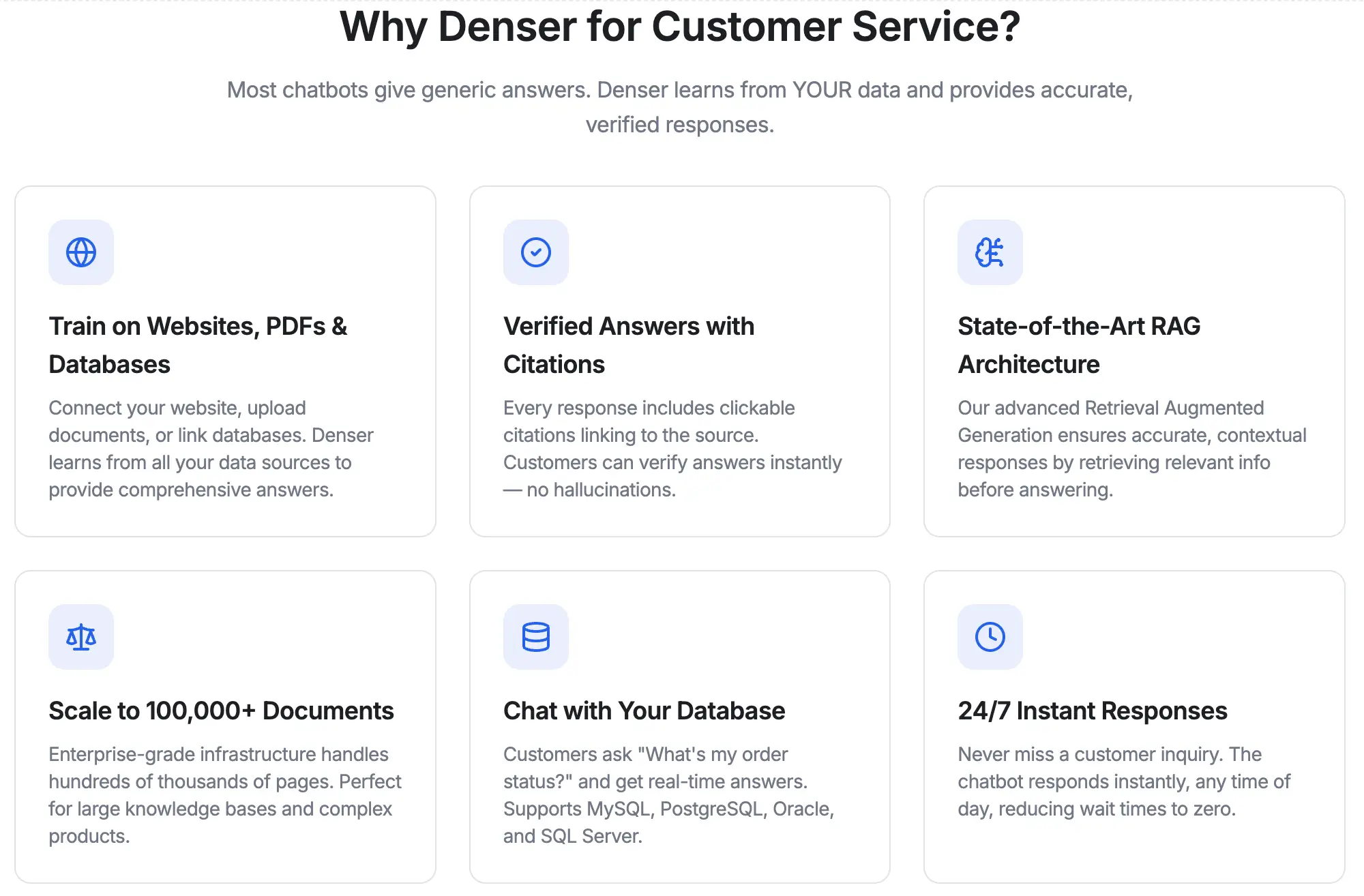
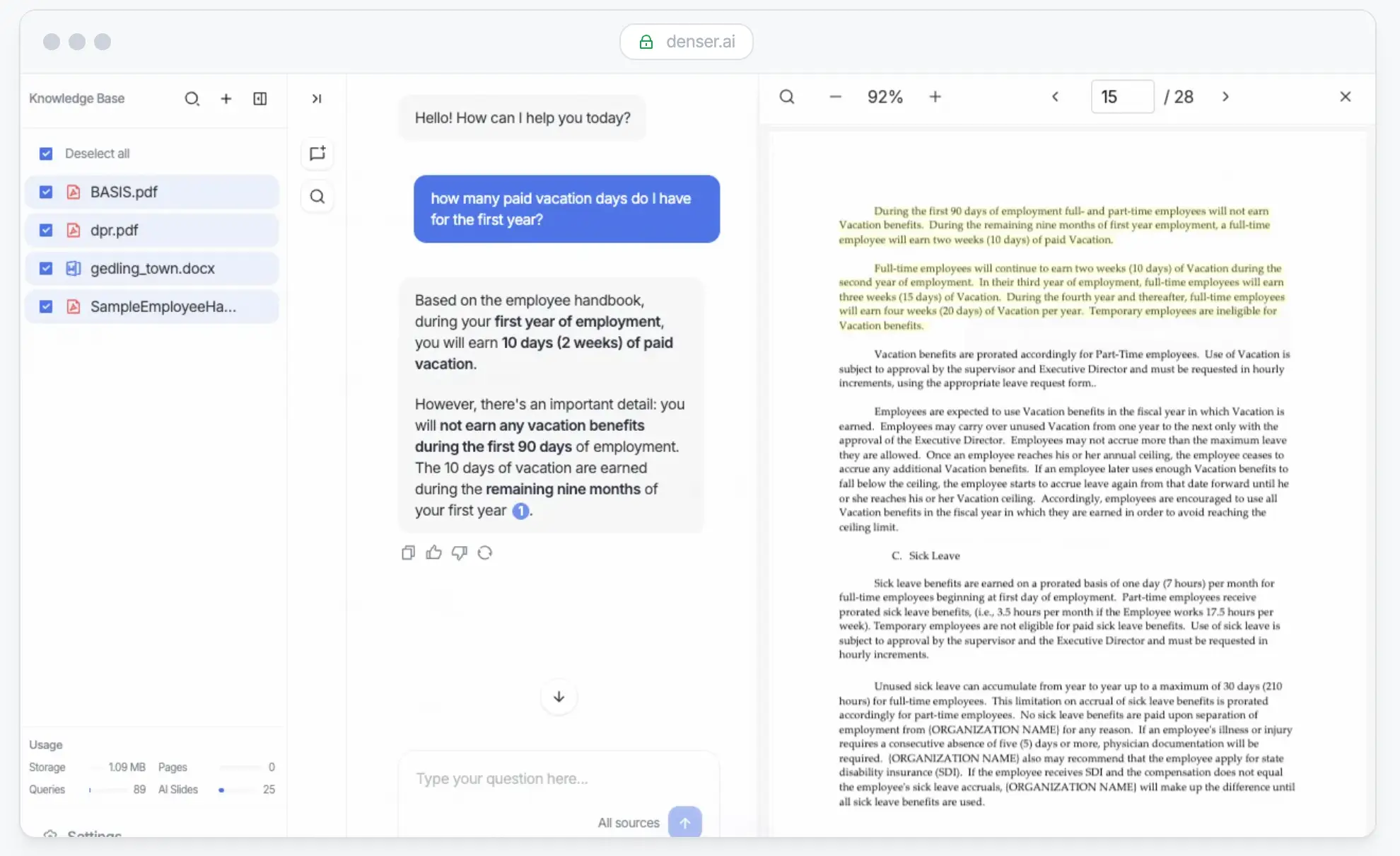
Because answers are generated from real documentation, they can include source citations, helping customers see exactly where the information came from. This greatly improves reliability compared to generic AI chat responses.
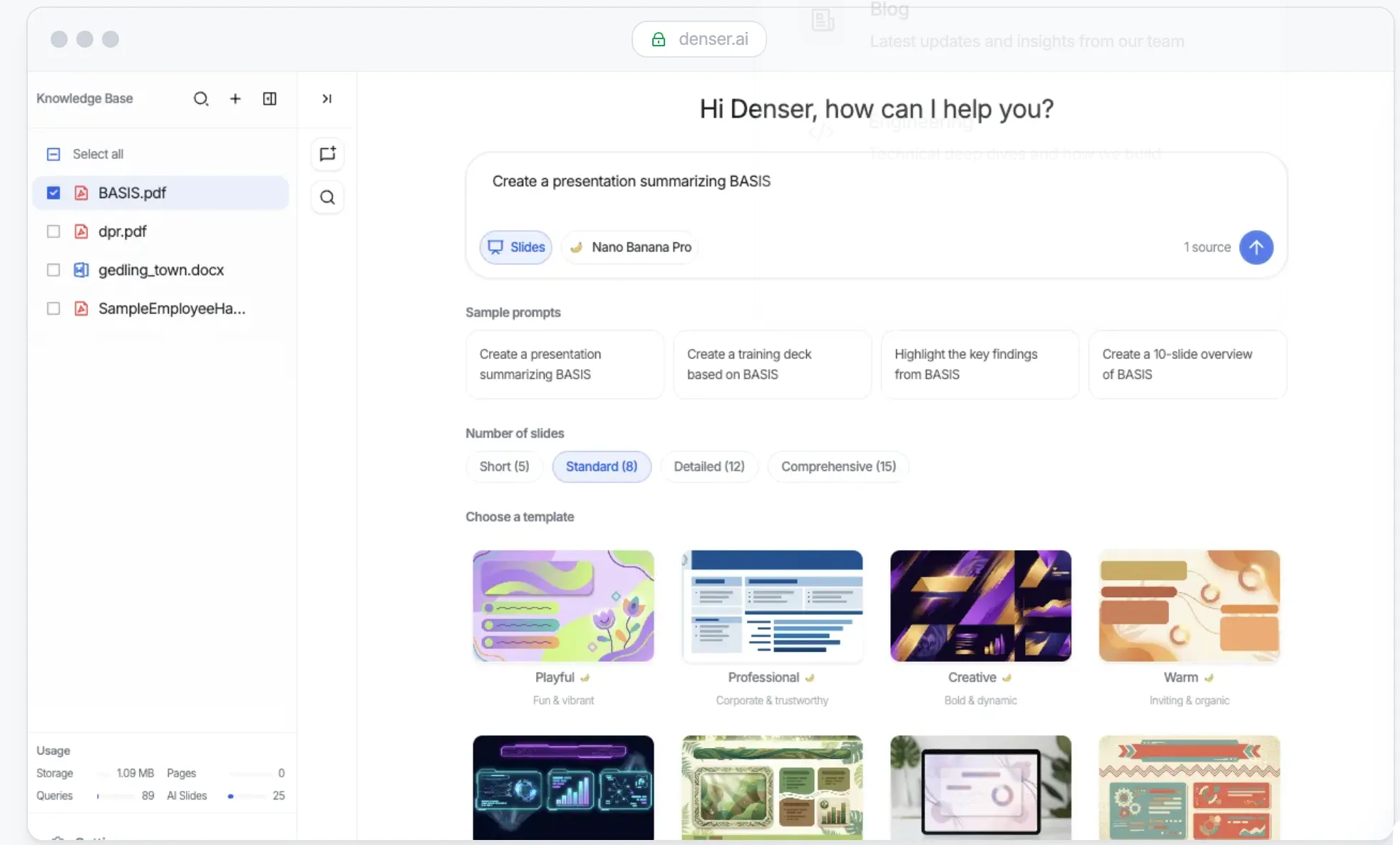
Try Denser AI Customer Support Automation Deploy an AI chatbot trained on your website, documentation, and knowledge base to automatically answer customer questions and reduce repetitive support workload.
Where Denser AI May Fit Better Than Other Options#
Denser is not automatically the best solution for every company. However, it becomes particularly compelling in several common scenarios.
Fast launch without a complex implementation project#
Denser is designed for rapid deployment. Most organizations can launch a working chatbot in under ten minutes, and full deployment typically takes minutes rather than weeks.
Teams that prioritize answer quality#
Denser uses retrieval-based AI with source citations, allowing answers to be grounded in real documentation rather than generic AI output. This improves trust and reduces unsupported responses.
Companies between two extremes#
Some teams find traditional service suites too heavy and simple chat widgets too limited. Denser sits in the middle ground—more capable than a basic FAQ bot, but much lighter than a full enterprise service stack.
A More Useful Way to Evaluate ROI#
One of the biggest mistakes companies make when evaluating customer service software is focusing only on subscription price.
A better question is: how much repetitive work can the platform remove from the team?
If a company handles thousands of routine support questions each month, even modest automation can free up significant agent time.
That time can then be redirected toward escalations, onboarding support, retention conversations, or other high-value interactions.
In many organizations, most support questions already have answers somewhere within existing documentation.
If a platform like Denser can resolve a large percentage of those questions instantly using verified sources, the human support team becomes dramatically more productive.
Which Businesses Should Consider Each Platform Type#
Different types of companies benefit from different customer service platforms.
Small businesses and startups usually benefit from tools that are easy to launch and affordable to test. If the primary challenge is repetitive customer questions, an AI-first support tool is often more practical than a heavy service suite.
Growing companies often reach a point where support volume increases faster than headcount. At this stage, a system that can answer questions directly from product pages, documentation, and policy content becomes much more valuable than a simple chat widget.
Large organizations may still require broader service platforms for ticket management and cross-team workflows. Even in these environments, an AI-first support layer can work effectively as a self-service front end that absorbs repetitive demand before it reaches the human support team.
Explore AI-First Customer Support with Denser AI#
If your support team is spending too much time answering the same questions repeatedly, an AI-first support platform may be worth evaluating.
Denser AI allows businesses to deploy an AI chatbot trained on their own website, documentation, and knowledge base.
The platform provides fast deployment, source-cited answers, multi-language support, and integrations with common business systems.
For companies focused on reducing repetitive support workload while maintaining answer accuracy, this approach can significantly improve support efficiency.
Explore Denser AI to see how an AI-powered support layer can automate customer inquiries, reduce manual workload, and deliver reliable answers from your business content.
Frequently Asked Questions About Digital Customer Service Software#
What is digital customer service software?#
Digital customer service software helps businesses manage and respond to customer inquiries across channels such as websites, live chat, email, and social media. Many modern digital customer service platforms also include automation or AI to answer common questions and reduce manual support workload.
How can AI improve digital customer service efficiency?#
AI can automate repetitive customer inquiries by retrieving answers from websites, FAQs, or knowledge bases. This allows AI-powered customer service software to respond instantly while reducing the number of tickets that require human agents.
When should a business consider an AI-first customer service platform?#
Businesses should consider an AI-first customer service platform when support teams receive large volumes of repetitive questions about products, policies, or account issues that already have documented answers.